
Fortnite is getting sloppy
Plus Metroid, Jetpack Joyride: The Board Game and game anniversaries


Hello friends!
Congratulations on surviving the first week of summer! You’ve earned a relaxing weekend of video games.
In this week’s newsletter, Alice is angry about AI in Fortnite and is also displeased with the Jetpack Joyride board game. While Tim explains why Samus needs to be better than everyone in Metroid and makes us all feel old with game anniversaries.
Enjoy!
My expectations of Fortnite were low, but holy crap
By Alice

This month’s new Fortnite season has opened with a lot of ground breaking things, some fun, some that are souring me on the game somewhat.
The fun thing is that Fortnite has finally freed the nipple and allowed a second shirtless male skin to have an exposed nipple for the second time in two months. Does this mean we’ll get more nipples in the future? Is this progress?
However what I’m troubled by is the proliferation of generative AI content in the game. There’s an emote featuring an AI-generated song, which is just gross. Epic is a company with more money than god and connections to every major music label out there, as well as limitless resources to discover and foster new musical talent. There is no excuse for this.
Generative AI has also started invading the game world, with AI slop posters littering the landscape. No wonder Tim Sweeney (Epic’s CEO with an estimated net worth of $5.1bn) came out against labelling games made with AI after Valve talked about beefing up its AI labelling features.
Say what you will about Fortnite, but I’m just not interested in interacting with art that hasn’t been made by a person or animal. A game as profitable as Fortnite has no excuse for using AI slop. Fortnite’s projected revenue for 2025 is around $6bn. If Epic paid developers $150k a year, that’s enough to cover 25,000 developers with an extra $2.75bn for other operating costs and profit. They just simply don’t need to be doing this nonsense.
While I don’t plan on fully quitting Fortnite over this (I’m hoping they change course) it does guarantee that I won’t ever spend another dollar in the game. If they’re not going to value their assets, why should I?
What to play
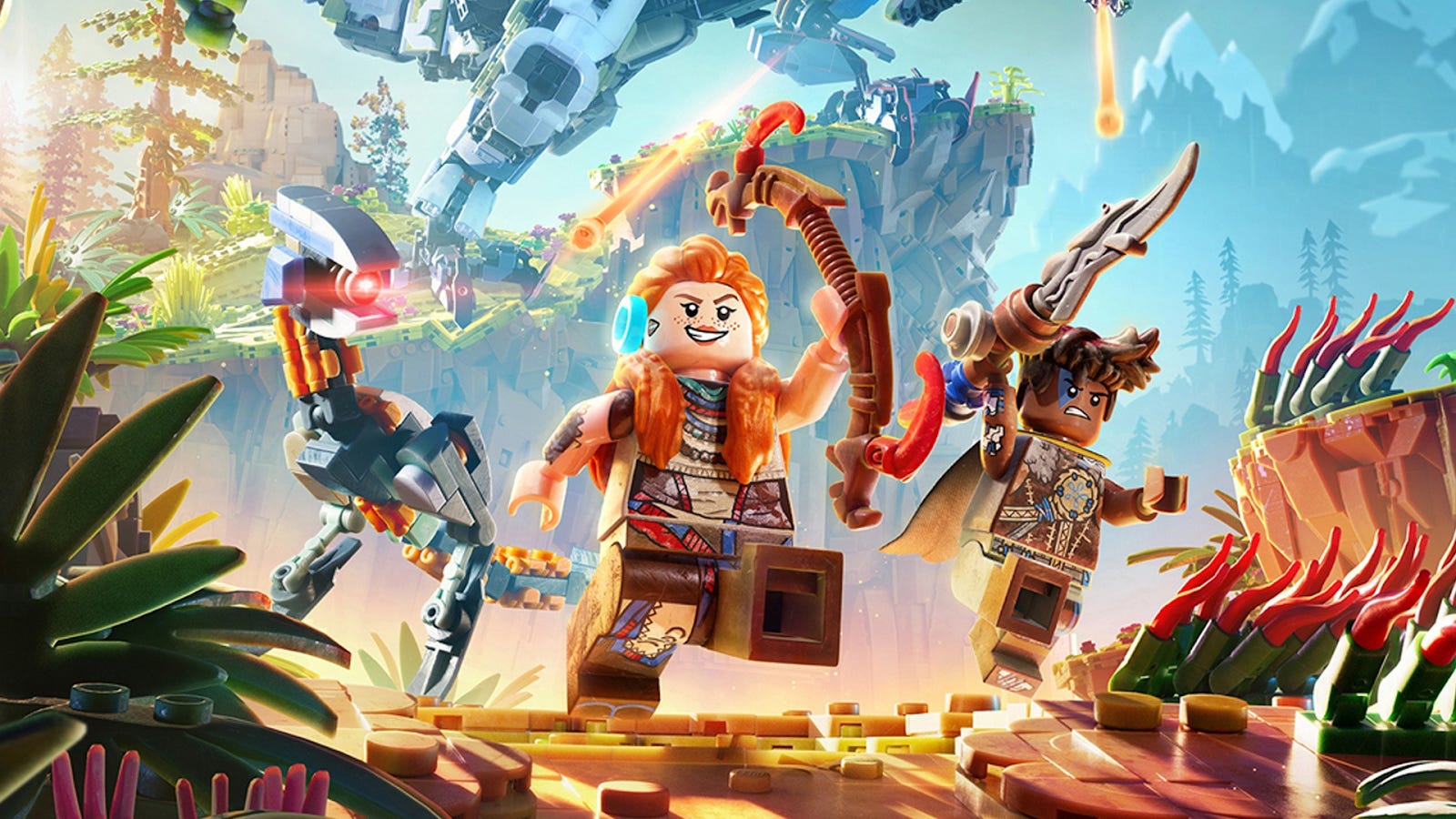
A new month means new games for PS Plus subscribers to add to their libraries, and this time it’s five rather than three! Like a Christmas present you pay for. The headliner is Lego Horizon Adventures, which adapts the popular Sony franchise into a brick-bashing affair. Then there’s the dash action of Neon White, a pair of first-person horror games in Killing Floor 3 and The Outlast Trials, and the extraction shooter with the name I steadfastly refuse to ever say out loud, Synduality Echo of Ada.
Day one additions to Game Pass this week are throwback arcade brawler Marvel Cosmic Invasion, and sci-fi moon base horror Routine. Narrative adventure Lost Records: Bloom & Rage has also been added, and a surprise drop late last week was an early access version of co-operative space life sim Young Suns.
A big week for Apple Arcade, with Cult of the Lamb, Power Wash Simulator and sidescroller Spongebob: Patty Pursuit 2 all hitting the service. There are also plus versions (meaning no ads or microtransactions) of Subway Surfers and Naruto: Ultimate Ninja Storm.
Samus! Don’t forget to use missiles!
By Tim
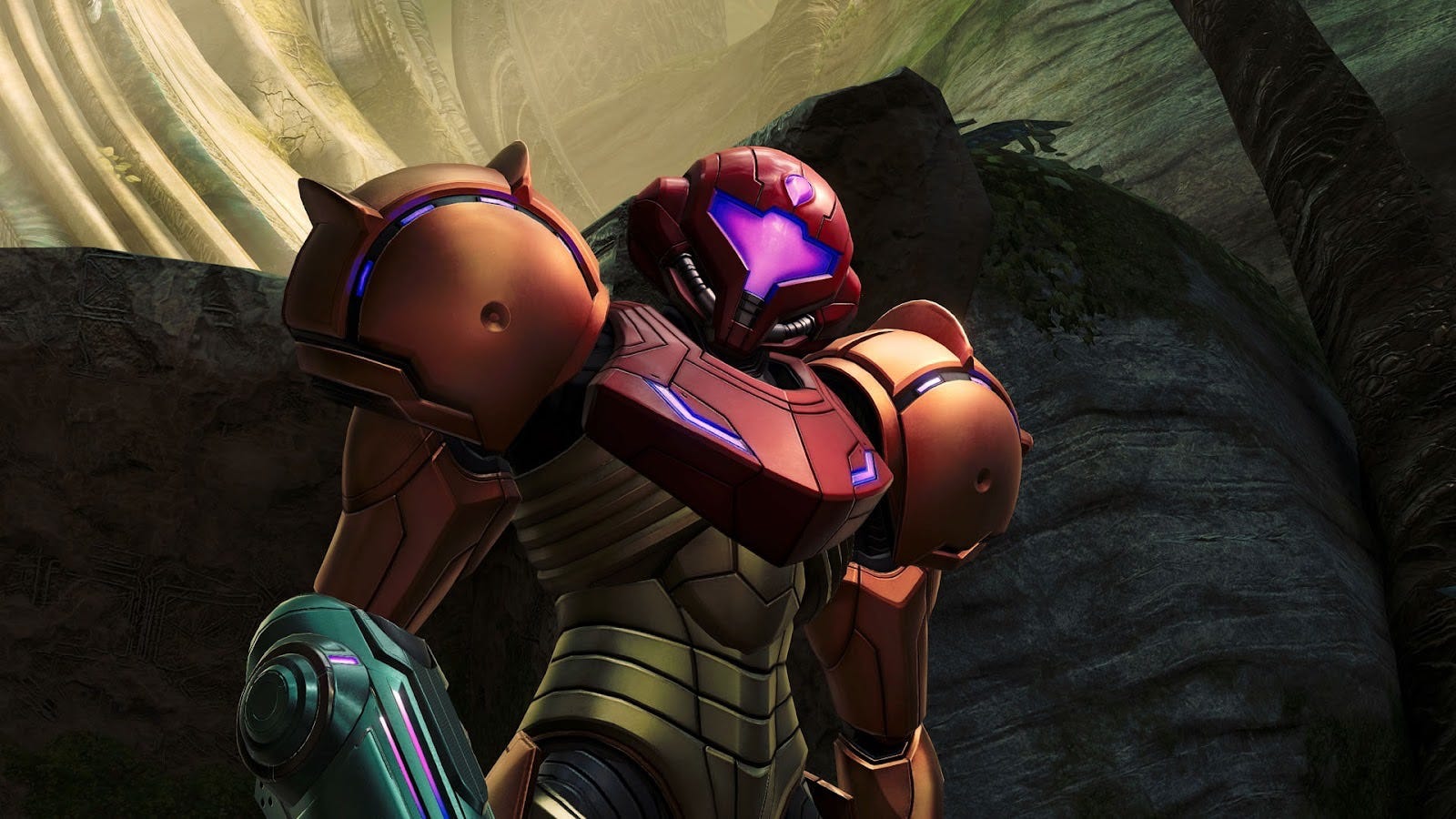
As a long-time Metroid fan, it’s easy to get frustrated with the way Nintendo handles the series. We’ve got studios all over the world making great games inspired by 2D Metroid, yet it’s 15 years between Fusion and Samus Returns? We get three excellent first-person games in the space of five years, and then an 18-year gap? Clearly the issue is that a small number of people really love the series and nobody else cares, so it’s not necessarily worth investing in unless the fanbase can be widened. And attempts to address that may be responsible for some of the biggest misses in the series.
Metroid games are about exploring in isolation. Dead planets with dead cultures. The bravest and baddest bounty hunter in the galaxy against hordes of pirates and their bioweapons. When you think of bad Metroid games, you think of the ones where Samus has her power diminished by chatty idiots telling her how to operate. Where the final messages of ancient beings are undercut by loser humans worried about petty nonsense. So you can imagine my concern when, barely an hour into Metroid Prime 4 this week, I was interrupted by a whiny idiot human who immediately started telling Samus to check her map and when to use missiles. And instead of incinerating him immediately, the space goddess let him tag along.
Dialogue in Metroid games isn’t an instant deal-breaker per say. Fusion has it, and so does Prime 3, and people don’t complain so much about those because they’re great the overwhelming majority of the time. I’m not finished with Prime 4 yet so I’ll withhold judgement for now (I’m loving it so far, troopers aside), but the bigger problem isn’t that Retro put humans in here when they should know better. It’s that they’ve only partly committed to messing with the formula.
By all means, have elements to remind us that Samus is the final line of defense for millions of regular humans, not just extinct bird people. Find ways to humanise her too, if you need to. But you can’t have humans talk to her like a peer, or tell her what to do, if you also want her to be the ultimate mysterious badass who’s all business and almost never says a word. If anything, it makes Samus seem like the buffoon when she’s silently standing there amid quipping comrades, making occasional gestures the others need to interpret.
If we’re committing to the need for other characters in Metroid, to contextualise and tutorialise, then Samus needs to become more like Master Chief, a super soldier of few words (not none!), but one who’s respected and feared by friend and foe alike. She needs to reciprocate their humanity a little, and show why she’s worthy on a personal level as well as in combat. Selfishly though, I’d prefer it if we only ever saw the adventures where she encountered no friendlies whatsoever.
Bricks, Boards and Beginnings
by Alice
Jetpack Joyride is an absolutely classic Australian mobile game. You’re escaping a lab with a little jetpack, dodging enemies and collecting coins. It’s a simple concept, and we all went nuts for it.
It’s a uniquely video game concept, which is why I was curious about how they would make it work in board game-form.
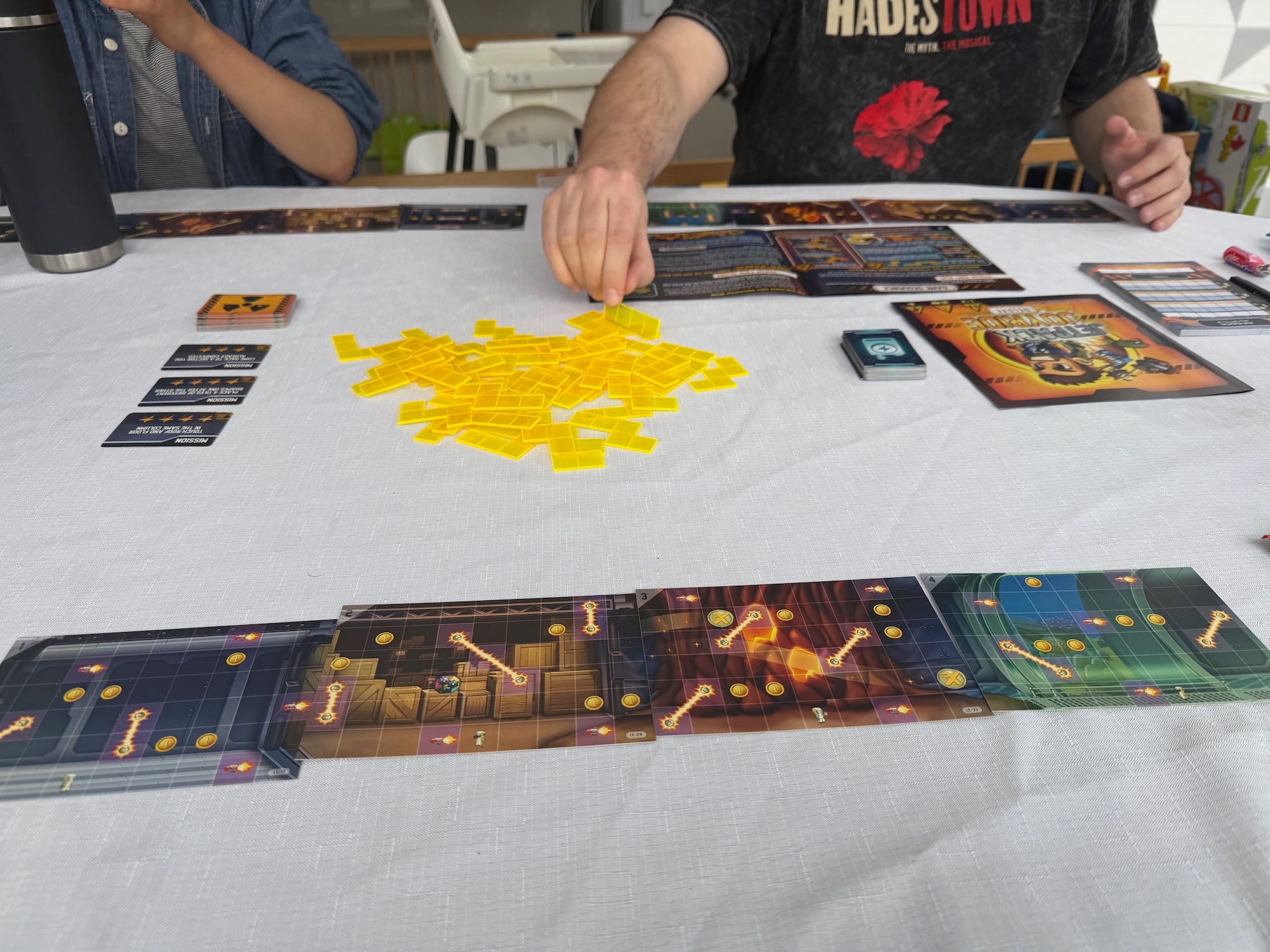
A group of four of us played the Jetpack Joyride board game on a day when we could have done literally anything else, but instead choose poorly.
In the board game you have four boards each portraying your journey from one side of the lab to the other. During a frenzied race, you and your friends grab different shaped tiles from a pile in the middle to try and neatly avoid obstacles, achieve objectives, get the most points, and get there first.
It’s absolute chaos which has the potential to be good. It came closer to making the mobile game into a successful board game than I anticipated, but it was just missing that spark that would make it fun. It had a lot of elements, yet it was somehow too many and not enough.
Adapting video games into board games is really difficult. There aren’t many that are able to make that switch because some things are designed for their original medium, and that’s ok. It’s just like how some books can be great movies, and some just don’t translate. I bought the novelisation of my favourite web series, so trust me when I say they often can’t translate in the opposite direction, either.
So, yeah. While I appreciate the attempt, all but the most hardcore Jetpack Joyride fans can skip this one.
Retro Esoterica
by Tim
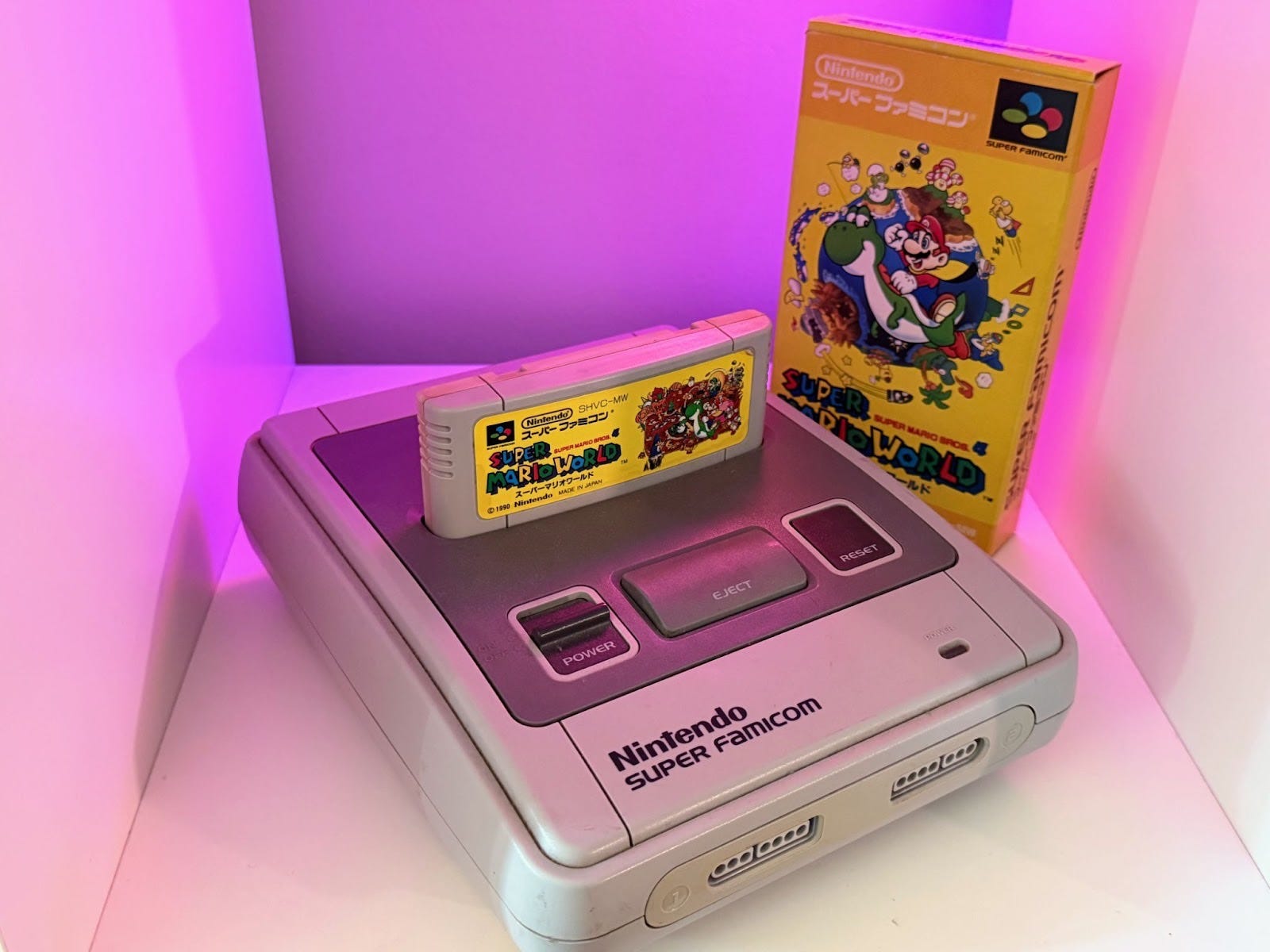
It’s time to look back at three games that celebrated a major anniversary in the last month. Historically, most years have had very quiet Novembers, but not 1990. So that’s why all three games we’re looking at today have just turned 35.
Super Mario World On November 21 1990, Nintendo released the Super Famicom, and with it the next evolution of Mario. World not only showed what the new hardware could do, with finely detailed art, huge rotating sprites and orchestral music samples, it also showed off a world of impressive scope, expanding Mario’s capabilities with the cape feather and the introduction of Yoshi. Even beyond all that, World has a level of ingenuity, flexibility and hidden secrets that I don’t think any other 2D Mario has matched. It’s beloved by hackers and speedrunners, but even given to a total newcomer today it stacks up against any platformer from any era.
F-Zero The only other launch title for the Super Facimon, this game was more concerned with showing off the system’s speed and faux-3D graphics capabilities than its ability to host broad and deep gameplay. By scaling the sprites ahead of the player and rotating the background, Nintendo achieved an effect that had so far only really been seen in arcades, and F-Zero made full use of that with blisteringly fast driving that punished mistakes with fiery death. It arguably doesn’t hold up too well against Super Mario Kart, which followed a few years later. But its grimy industrial future aesthetic does give it a unique vibe,
Castle of Illusion On the very same day the Super Famicom launched, Sega put out this officially licensed Mickey Mouse game for its Mega Drive, which had beaten Nintendo’s machine to the market by two years. These days it sounds silly to compare one platformer to the might of the Super Nintendo, but at the time Japanese players would have been weighing up a great new 16-bit game for a platform they already had, against two new 16-bit games for many times the price. Plus, Castle of Illusion is an all-time great. The art and animation feels pulled straight from a Disney short, the music rules, and it’s a tough but satisfying jump-and-bop platformer.
I am new to the metroid series and thank you for your take on it and the newest game. I have not picked it up yet but will be planning to when I finish Bonanza.